How to start an alumni association from nothing
No budget, no staff, no list, and a group chat with forty people in it. That is where nearly every alumni association begins. This is the order of work that gets one standing.
Legal and tax rules differ by country, so treat the part about registration as a prompt to check locally.
Decide what the association is for
An association is three things: a group of people, a purpose they agree on, and a list of who they are. Skip the purpose and you get a chat group that goes quiet in March.
- To keep people in touch. Reunions, chapter meets in the cities alumni ended up in, and a directory that finds the person you lost in 2003.
- To help current students. Careers evenings, mentoring, internships, a bursary. This is the purpose that gets the institution to take you seriously.
- To help the institution. A constituency it can talk to, and eventually money. Real, but the worst one to lead with.
Do not start with fundraising
An association whose first act is asking for money gets one poor response and struggles to ask again. Spend the first year building a list and doing something useful for students.
Write the purpose in one sentence
It should fit on the website and in an email to the principal without editing. If it needs a second sentence, you will be explaining it at every meeting for five years.
Eight steps, in this order
Three to six months from the first conversation to the first event. None of it needs a budget.
1. Find five people, not fifty
Five who will attend meetings beats forty who will not. Pick for reliability rather than seniority, and cover several decades, because an association founded by one batch stays one batch.
2. Hold a founding meeting and write it down
Agree the purpose, the name and who does what. Take minutes, however informal. The written record stops the same argument happening three times.
3. Get the institution's blessing early
See the head or the registrar before you launch. Ask for two things: permission to use the name, and access to whatever alumni records exist.
4. Write a constitution
Boring, short, and agreed before anyone disagrees. The next section covers what goes in it.
5. Appoint the first office bearers
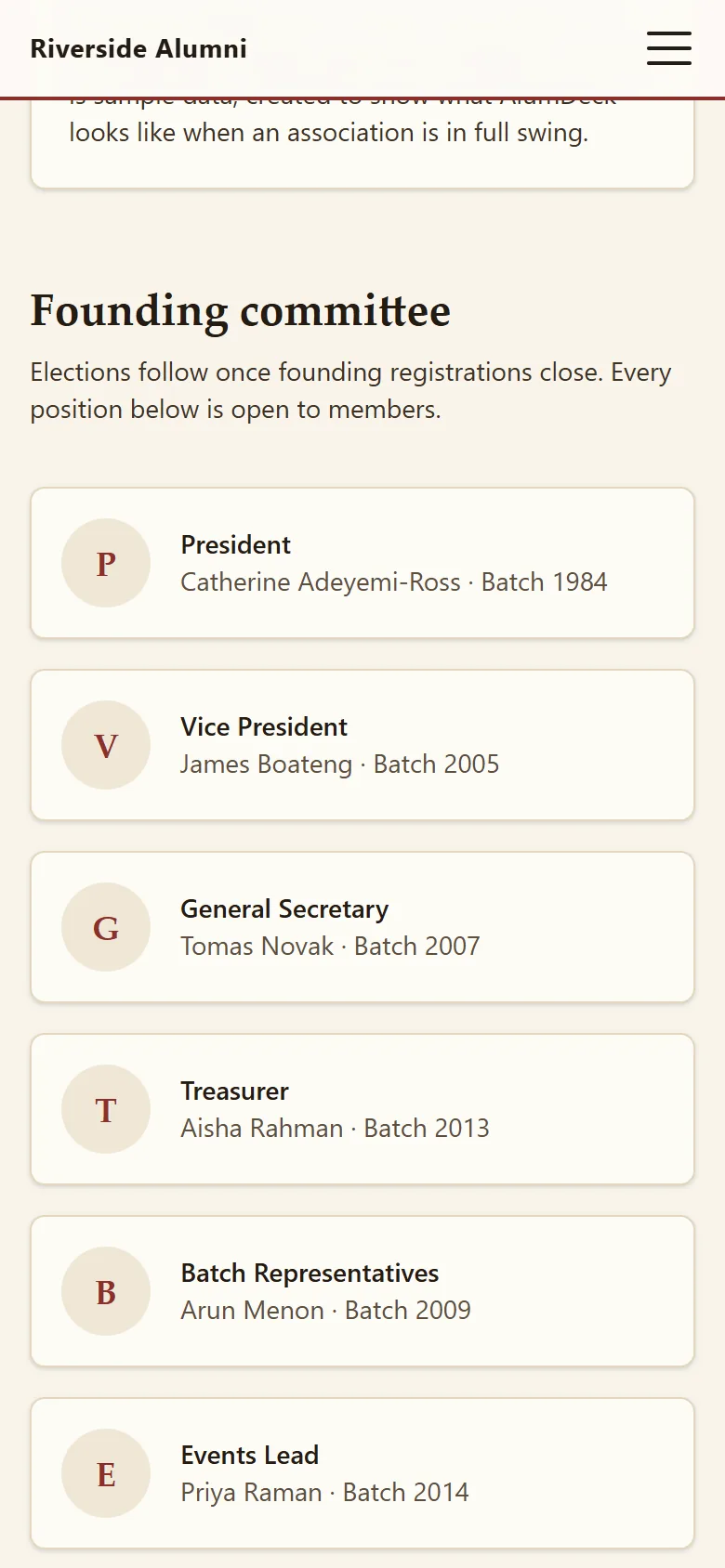
Chair, secretary, treasurer, and someone who owns the website and the member list. Set terms of one or two years now, so changing people is routine rather than a crisis.
6. Build the first member list
Combine the old registers, class group chats, the last reunion's invitation list and the people who find you. Ask only for what you will use: name, batch year, email, city, occupation.
7. Sort out money and registration
Open a bank account in the association's name, never a personal one. Whether you must register formally depends on your country and on whether you hold funds, so ask someone locally.
8. Put up a website, then hold one event
In that order, a few weeks apart. A careers evening for final-year students is the easiest first event to run and the easiest to get the institution behind.
What belongs in the constitution
One or two pages, written while everyone is getting along, because that is the only time it can be written calmly.
- The name of the association and the institution it belongs to.
- The aims, in the plainest language you can manage.
- Who can be a member. Every former student is simplest; decide about staff and honorary members now, not during an argument.
- Whether there are subscriptions, how much, and what happens if someone does not pay.
- The committee: roles, numbers, length of a term, and how someone is removed if they stop turning up.
- How the committee is elected, who may vote, and how the annual meeting is called, including the quorum.
- How money is handled, who signs, and that accounts are presented annually.
- How the constitution can be amended, and what happens to funds and records if the association is wound up.
- A short clause on member data: what you collect, and that it goes no further than the committee.
The website that holds it up
An association is only as durable as its record of who belongs to it, and that record must not live on one person's laptop.
- Let an alumnus register, and let a human check they really are one.
- Hold names, batch years and contact details in one searchable place.
- Say who you are, what you are for, and who is on the committee.
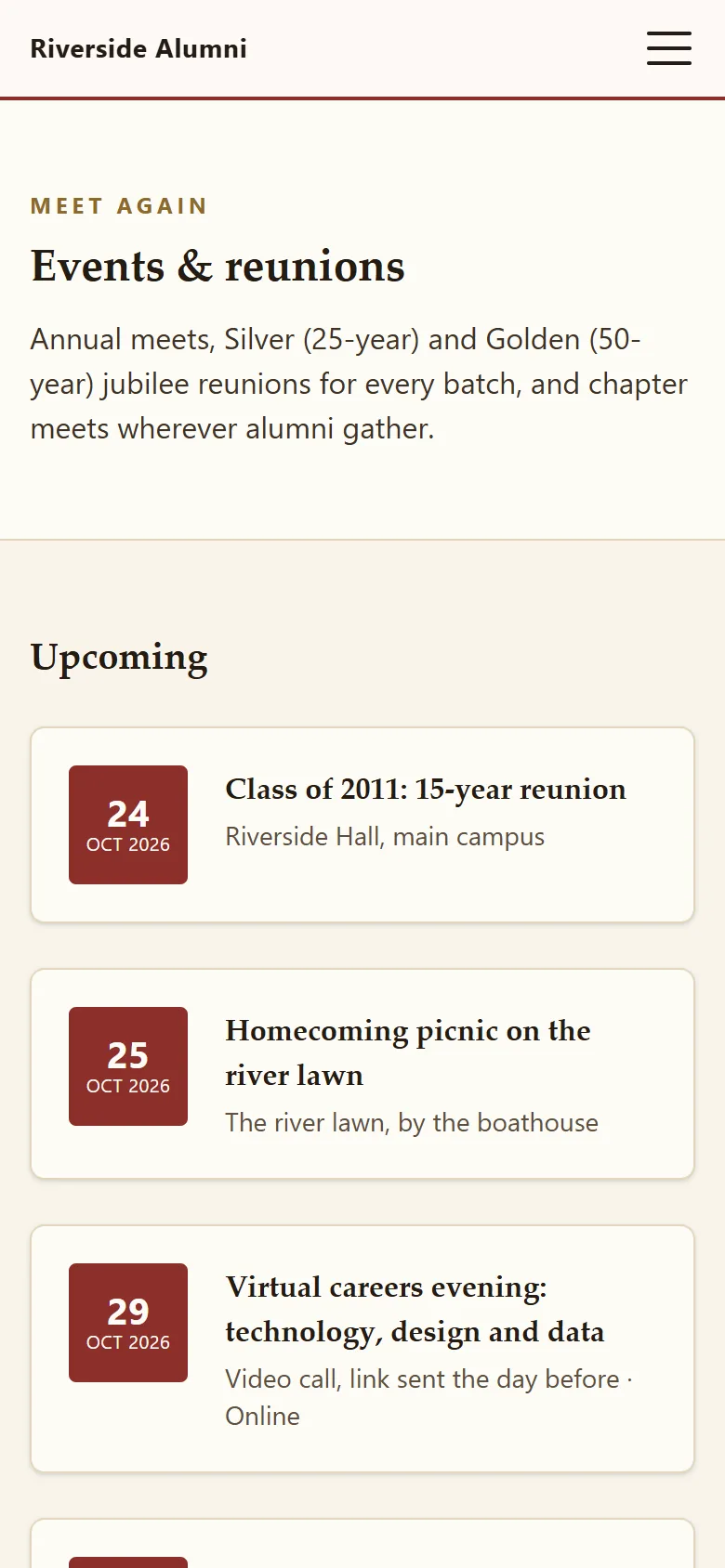
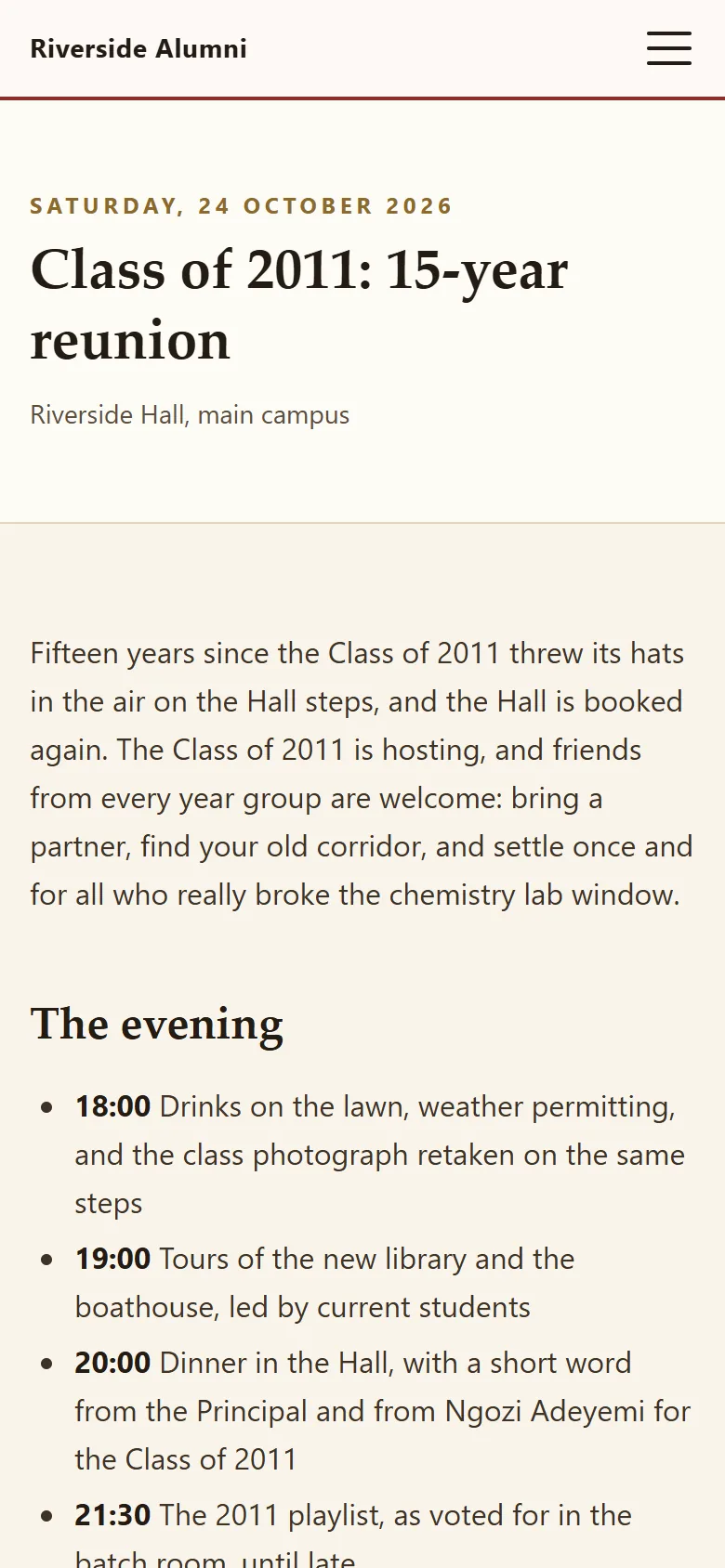
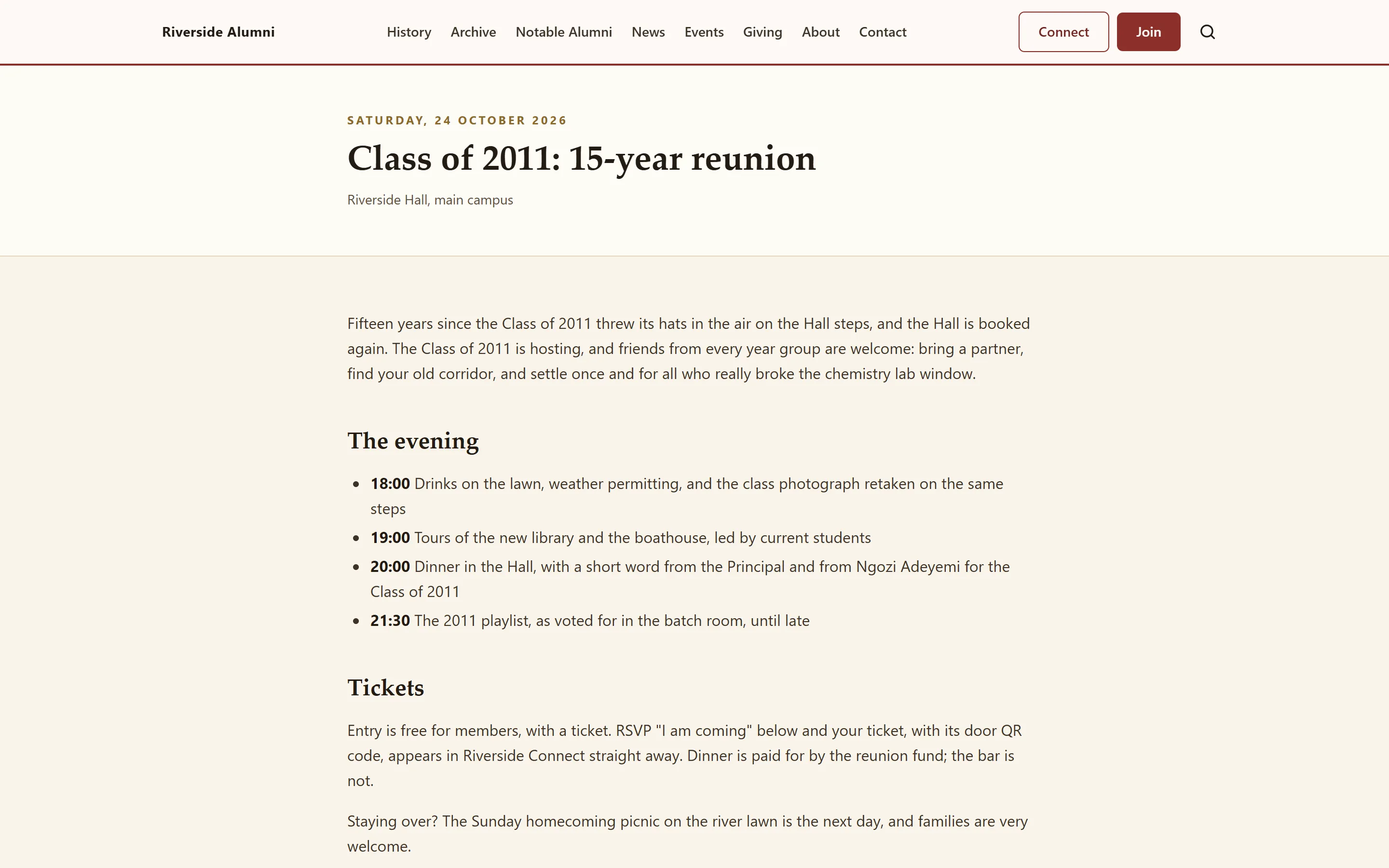
- Carry an event page with a date, a venue and an RSVP list you can count.
- Be found by someone searching for your institution's name plus alumni.
You do not need software on day one
For the first twenty members, a page and a spreadsheet are fine. The moment you are copying the same address into three places, or only one person can say who is a member, stop propping the spreadsheet up.
Three questions to ask of anything you consider
Who owns the data if we stop paying. What does this cost in year five, not year one. Can the next committee take it over without the person who set it up.
AlumDeck is our answer: a complete alumni portal on your own hosting for $49 once, with unlimited members, a directory, events, giving pages and an admin panel. The honest limits are that the server, the backups and the patching are yours, and there is no phone number to call.
Next: the reunion website page shows what a first event looks like, and the cPanel install guide covers setup end to end.
What founding committees ask
Do we need to register the association legally?
It depends on your country and on whether you will hold money in the association's name. In many places an informal association with a constitution and a bank account is normal; elsewhere, holding funds or claiming a tax benefit requires registration. Ask an accountant locally, or ask an established association nearby what they did.
Should we charge membership dues?
Not in the first year. Dues turn every conversation into a sales conversation while you are still finding people, and collecting small amounts from a scattered group costs more effort than it raises. If you introduce them later, keep free membership open to everyone.
How do we get the institution to cooperate?
Ask for something small and specific, and offer something concrete back. Permission to use the name and access to existing records, in exchange for running a careers evening, is a trade most heads will take. Then report back, because an association that only ever asks does not get asked again.
Directory first, or event first?
Start the directory and hold the event a few weeks later. The event is what makes people register, so the registration page has to exist before it. The trap is a well-attended evening with no way to capture who came.
How do we stop it dying after two years?
Fix a calendar of two events a year and hold them even when they are small. Put a second and third person on every account, list and inbox. Write decisions down. Associations rarely collapse from lack of enthusiasm; they collapse when the one person who held everything stops replying.
When the spreadsheet stops coping
A directory, member verification, events with RSVP, news, galleries, giving and a full admin panel, on your own hosting, for one payment of $49.
Not sure what you need yet? Email hello@alumdeck.com. We will tell you if you are not ready for software.